
Drone Inspection Services
While there are always risks in anything related to construction or infrastructure maintenance, the introduction of drones and unmanned aerial vehicles have done so much to reduce the risks.
Additionally, our drone capabilities and camera quality improvements have expanded the usability particularly in inspecting infrastructure items such as roofs, solar panels and solar farms, bridges and other structures, telecommunication towers, construction sites, terrain mapping, agricultural monitoring and real estate.
If you’re a homeowner, pulling the ladder out of the garage may seem like the easiest way to go about inspecting the roof of your home—but, it isn’t. It’s dangerous! Not to mention a human on a roof just can’t safely inspect all aspects of the roof especially on high peaks. Drones are absolutely the best for performing building inspections. Modern technology now allow a faster, easier and more efficient way to inspect all the areas of a roof that are just plain dangerous to inspect by physically putting a human at risk. Not to mention a drone will capture still images and videos of normal vision or thermographic.
Inspecting buildings using a thermal imaging camera is a powerful and non invasive means of monitoring and diagnosing the condition of buildings. Thermal imaging technology has become one of the most valuable diagnostic tools for building inspections. A thermal imaging camera can identify problems early, allowing them to be documented and corrected before becoming more serious and more costly to repair.
A building diagnostics inspection with a thermal imaging camera can help with:
- Visualise energy losses
- Detect missing or defective insulation
- Source air leaks
- Find moisture in insulation, in roofs and walls, both in the internal and the external structure
- Detect mould and badly insulated areas
- Locate thermal bridges
- Locate water infiltration in flat roofs
- Detect breaches in hot-water pipes
- Detect construction failures
- Monitor the drying of buildings
- Find faults in supply lines and district heating
- Detect electrical faults

The fact that drones enable an individual to perform a roof inspection while remaining safely on the ground may be the single greatest advantage of their use. As per the HSE, around than 14 people die each year in the United Kingdom falling from ladders, and falls from ladders account for almost a third of all injuries 150k ladder-related injuries are treated in the emergency room. The use of drones all but eliminates this risk entirely.
Industry studies show utilising drones for inspecting a roof can cut the inspection time down, on average, from three hours to one. For a roofing estimator or an insurance adjuster, this can prove invaluable allowing them to inspect far more properties in a single day with a higher degree of accuracy.
It goes without saying that there are some buildings and homes with roofs that are either inaccessible or simply too daunting to just pull out the ladder. A drone-based roof inspection performed by a skilled pilot can yield images a person would never be able to access. Can you really picture yourself atop that fourth-story gable with a tape measure and a camera, holding onto a ladder or dangling under an overhang?
At LCS we can offer the following drone services:
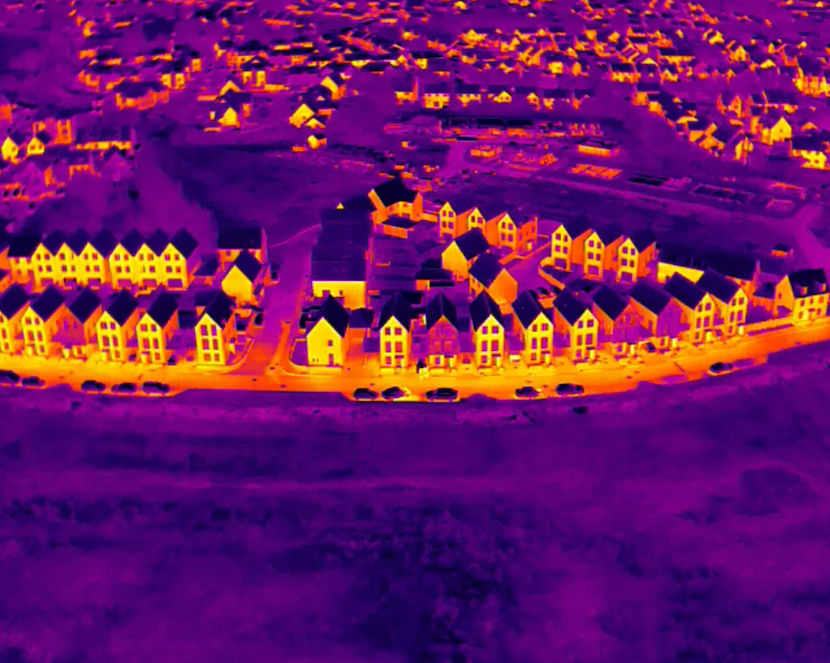
- Roof Inspection – Visual / Thermal
- Building Inspection – Visual / Thermal
- Bridge Inspection – Visual / Thermal
- Civil Infrastructure Inspection – Visual / Thermal
- Commercial Building Inspection – Visual / Thermal
- Land Survey
- Residential Property Aerial Photography and Videography
- Solar Panels Inspection – Visual / Thermal
- Telecommunication Tower Inspection – Visual / Thermal
- Other – Visual / Thermal
You can see all our services here.
We are ready to work on your project, so contact LCS today to get a price quotation. Make sure you provide as many details as possible about the required job or operation you want us to undertake for you. Also, please let us know if there are special requirements or restrictions in the area and please provide the exact address and post code or GPS coordinates for us to be able to check further with the CAA for any flight restrictions.


